Behind the Scenes of a Fashion Supply Chain: From Fibre to Finished Garment
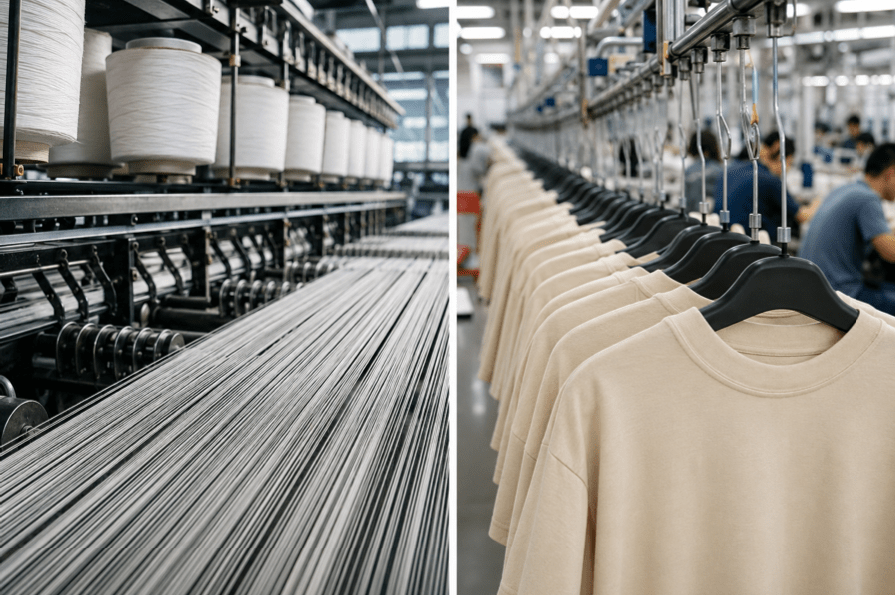
When a customer buys a garment, they see the finished product—a perfectly stitched blazer, a premium knitwear piece, or a beautifully printed dress. What they don't see is the complex journey that garment has taken before reaching the shop floor.
A typical fashion supply chain involves dozens of specialist businesses, hundreds of production steps, strict quality controls, and months of planning. For fashion brands, understanding this journey is essential. Every stage affects cost, quality, lead times, sustainability, and ultimately customer satisfaction.
Here's a closer look at what really happens behind the scenes, from raw fibre to finished garment.
Every stage of the fashion supply chain, from fibre selection to final delivery, influences a garment's quality, cost, sustainability, and commercial success.
What Is a Fashion Supply Chain?
A fashion supply chain is the complete network of people, processes and businesses involved in turning raw materials into a garment that reaches a customer. It spans fibre producers, spinners, weavers and knitters, dye houses, garment factories, quality inspectors, logistics providers and retailers, all working in sequence to move a product from concept to shelf.
Unlike a single production line, a fashion supply chain is rarely controlled by one company. Brands typically coordinate a web of independent suppliers spread across multiple countries, each specialising in a different stage. This makes communication, planning and quality control just as important as manufacturing itself. A well-managed supply chain shortens lead times, controls cost, protects quality and helps brands respond quickly to shifting trends and demand.
Stages of the Apparel Supply Chain
Stage 1: Fibre Selection – The Foundation of Product Quality
Every garment begins with a fibre, and choosing the right one influences almost every aspect of the final product.
Natural fibres such as cotton, linen, wool, cashmere and silk each offer unique performance characteristics. Cotton provides breathability and versatility, merino wool offers natural temperature regulation, while linen delivers durability and moisture management.
Synthetic fibres such as polyester, nylon and elastane contribute stretch, wrinkle resistance and durability, making them valuable for activewear and performance garments.
Today, fibre selection is no longer based solely on price or aesthetics. Buyers increasingly request certified materials, including Organic Cotton Standard (OCS), Global Organic Textile Standard (GOTS), Better Cotton, Responsible Wool Standard (RWS), and Global Recycled Standard (GRS), to demonstrate responsible sourcing and traceability.
The chosen fibre also determines the manufacturing route, influencing spinning methods, dye absorption, fabric construction, production costs and environmental impact.
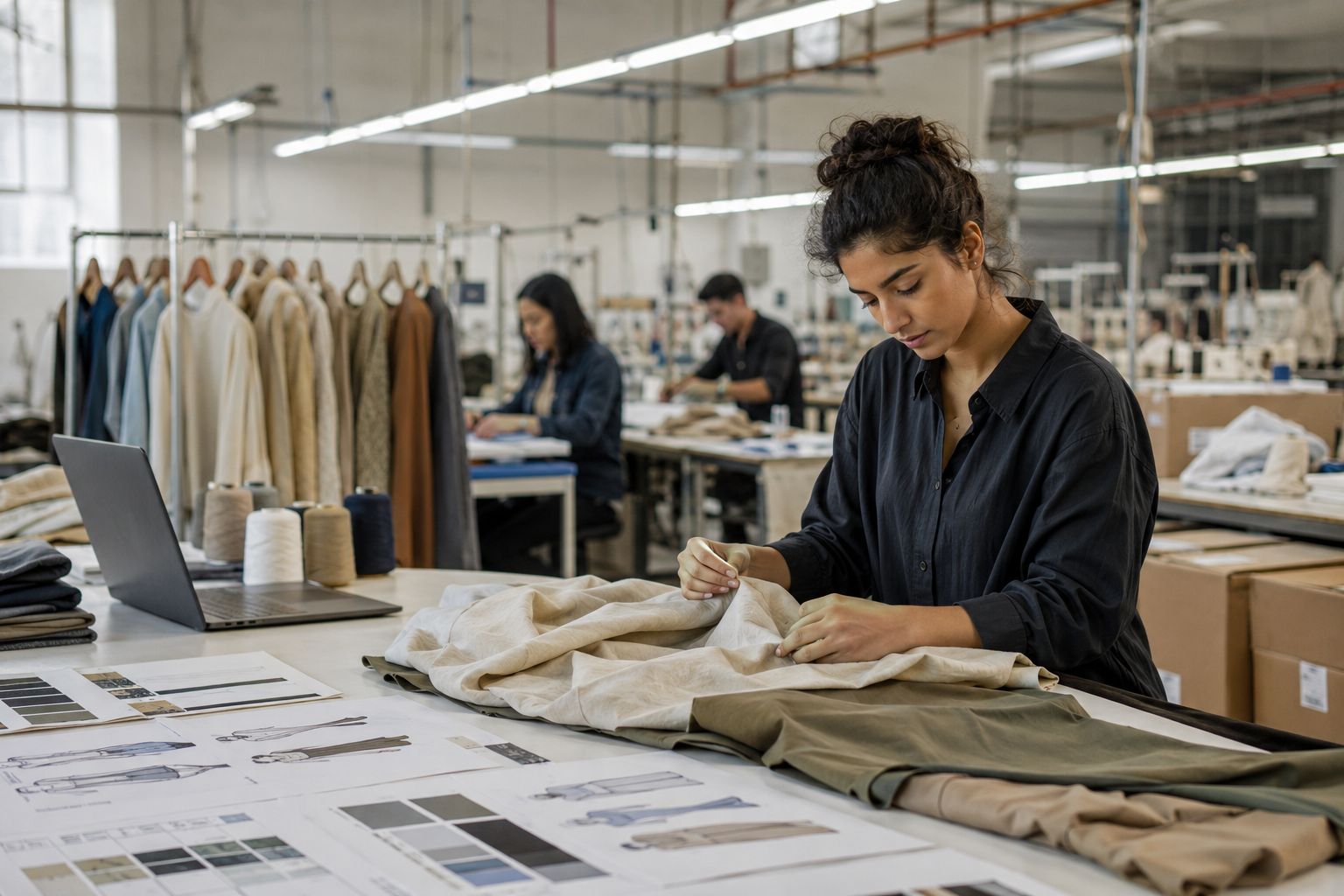
Why Traceability Matters More Than Ever in Fashion Manufacturing
Stage 2: Yarn Manufacturing and Fabric Construction
Raw fibres cannot be used directly. They must first be cleaned, processed and spun into yarn. The spinning process affects yarn strength, softness and appearance. Compact spinning, ring spinning and open-end spinning all produce yarns with different characteristics depending on the intended end use.
The yarn is then transformed into fabric through either weaving or knitting.
- Woven fabrics are created by interlacing warp and weft yarns, producing structured materials suitable for shirts, trousers, tailoring and outerwear.
- Knitted fabrics are formed using interconnected loops, offering greater stretch and comfort for T-shirts, knitwear, sportswear and loungewear.
Fabric construction decisions influence garment weight, drape, durability, stretch recovery and production efficiency.
Stage 3: Fabric Dyeing, Printing and Finishing
Grey fabric (unfinished fabric) undergoes several technical treatments before it is ready for garment production.
Dyeing methods vary depending on fibre composition. Reactive dyes are commonly used for cotton, while dispersed dyes are typically used for polyester. Digital printing has grown rapidly because it allows shorter production runs with reduced water consumption compared to traditional screen printing.
Fabric finishing is often where performance features are introduced. Depending on the end product, mills may apply:
- Enzyme washing for a softer hand feel.
- Anti-pilling treatments for knitwear.
- Water-repellent finishes for outerwear.
- Wrinkle-resistant finishes for formalwear.
- Moisture-management finishes for sportswear.
- Peach or brushed finishes for improved softness.
These treatments can significantly influence both product performance and retail value.
Stage 4: Product Development and Technical Sampling
Before production begins, brands collaborate closely with manufacturers to develop production-ready garments.
This stage typically includes:
- Tech pack review.
- Pattern creation.
- Size grading.
- Fabric and trim sourcing.
- Prototype samples.
- Fit samples.
- Salesman samples.
- Pre-production (PP) samples.
Each sample serves a different purpose. Fit samples ensure sizing accuracy, while PP samples confirm that the factory can consistently reproduce the approved design using production materials and processes.
Skipping or rushing this stage often leads to expensive quality issues during bulk manufacturing.
Stage 5: Bulk Garment Manufacturing
Once approved, production begins. Fabric is first inspected using systems such as the 4-Point Fabric Inspection System, which identifies weaving faults, stains, holes and colour inconsistencies before cutting starts.
Computerised marker planning is then used to maximise fabric utilisation and reduce waste. Since fabric often accounts for 50 to 70% of a garment's manufacturing cost, efficient marker planning has a direct impact on profitability.
After cutting, garment components move through multiple sewing operations. Rather than being assembled by one machinist, production is divided into specialist workstations. One operator may attach collars, another insert sleeves, while others complete side seams, cuffs, buttonholes or hems.
Many factories now use lean manufacturing techniques, modular production lines and real-time production monitoring to improve efficiency and reduce bottlenecks.
Stage 6: Quality Control Throughout Production
Quality isn't checked only at the end; it is monitored continuously.
Professional factories usually perform three key inspections:
- Inline inspections, where defects are identified during sewing.
- End-line inspections, where completed garments are checked before packing.
- Final random inspections (FRI), often carried out according to AQL (Acceptable Quality Limit) standards before shipment.
Inspectors assess stitching quality, measurements, colour consistency, labelling, accessories, packaging and overall workmanship.
For technical garments, additional laboratory testing may include colour fastness, seam strength, dimensional stability, abrasion resistance, pilling performance and chemical compliance.
Stage 7: Packing, Logistics and Delivery
Even after production is complete, significant work remains. Garments are steamed, pressed, folded, tagged, packed according to retailer specifications and loaded into cartons designed to maximise shipping efficiency.
Logistics teams coordinate customs documentation, freight bookings, country-of-origin requirements and delivery schedules. Any delay at this stage can affect seasonal launches, retail promotions or e-commerce inventory availability.
For many brands, supply chain visibility has become just as important as manufacturing itself. Digital product passports, RFID tracking, ERP systems and real-time production monitoring are increasingly helping businesses improve forecasting, inventory management and traceability.
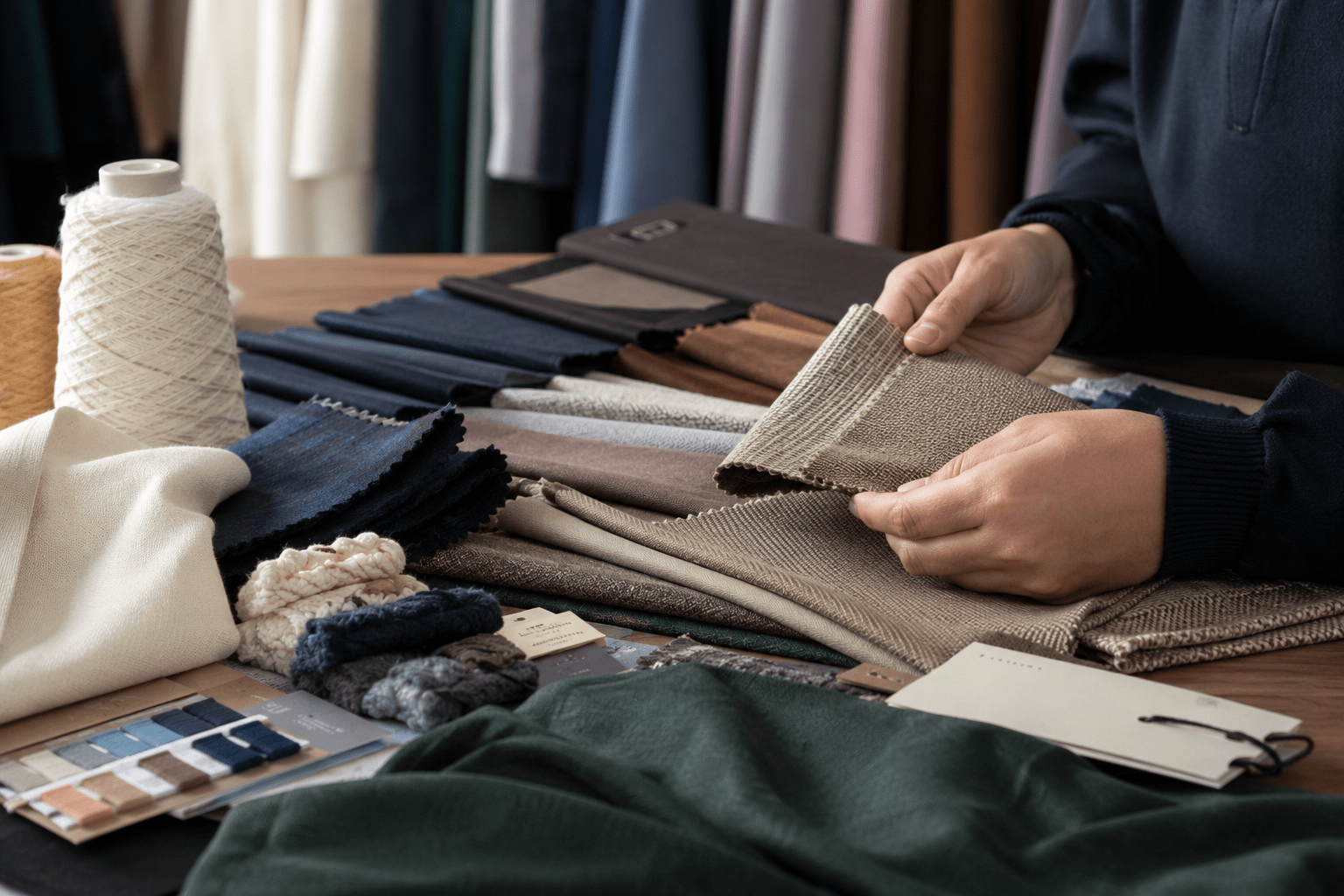
What Buyers Look for When Sourcing High-End Fabrics
How Sustainability Is Transforming Fashion Supply Chains
Sustainability has moved from a marketing message to a core sourcing requirement. Brands are increasingly expected to prove, not just claim, that their supply chains minimise environmental and social harm.
Key shifts include:
- Certified and traceable materials: Greater use of organic, recycled and responsibly sourced fibres backed by recognised certifications.
- Water and energy reduction: Mills investing in low-impact dyeing, closed-loop water systems and renewable energy to reduce resource consumption.
- Circularity: Growing interest in recyclable fabrics, take-back programmes and garments designed for disassembly and reuse.
- Ethical labour practices: Stronger auditing of factory working conditions, fair wages and worker safety across supplier tiers.
- Transparency and traceability: Digital product passports and supply chain mapping tools enabling brands and consumers to trace garments back to their raw material source.
These changes are being driven by regulation, retailer requirements and evolving consumer expectations, reshaping how brands select and manage manufacturing partners.
Technology Driving Modern Fashion Supply Chains
Technology is increasingly becoming the backbone of an efficient, transparent and resilient fashion supply chain . Digital tools help brands make smarter sourcing decisions while improving speed, quality and visibility.
- 3D design and virtual sampling: Reducing the need for physical samples while accelerating product development.
- AI-driven demand forecasting: Helping brands predict trends and order volumes more accurately to minimise overproduction.
- RFID and IoT tracking: Providing real-time visibility of products as they move through factories, warehouses and shipping routes.
- ERP and PLM systems: Connecting design, sourcing, production and logistics data within a single platform for better collaboration and decision-making.
- Digital product passports and blockchain traceability: Verifying material origin, certifications and manufacturing history for greater compliance and consumer trust.
- Factory automation: Computerised cutting, sewing assistance and production monitoring tools improving efficiency, consistency and quality.
Together, these technologies help brands move faster, achieve greater waste reduction , and make sourcing decisions based on real-time data rather than estimates.
Common Challenges in the Fashion Supply Chain
Even well-managed supply chains face ongoing challenges that can affect production efficiency, profitability and customer satisfaction.
- Fragmented visibility: Many brands have limited insight beyond their Tier 1 suppliers, making it difficult to verify practices further up the supply chain.
- Long and complex lead times: Multiple production stages across different countries increase the risk of manufacturing and shipping delays.
- Rising material and labour costs: Fluctuating raw material prices and increasing wages continue to put pressure on sourcing budgets.
- Quality inconsistency: Differences between sample approval and bulk production can impact product quality and brand reputation.
- Compliance and regulation: Expanding environmental and labour regulations require brands to monitor and document supplier performance more carefully.
- Overproduction and inaccurate forecasting: Poor demand planning can result in costly excess inventory or product shortages.
- Geopolitical and logistics disruption: Trade restrictions, customs changes and shipping bottlenecks can interrupt even the best-planned production schedules.
Addressing these challenges requires stronger supplier relationships, better supply chain visibility and proactive contingency planning.
Building a Stronger Fashion Supply Chain
Today's fashion supply chain is no longer simply about finding the lowest production cost. Brands are looking for manufacturing partners who can offer technical expertise, certified materials, transparent communication, flexible production capabilities and consistent quality.
This is why face-to-face fashion sourcing events remain so valuable. Meeting manufacturers, fabric mills and supply chain specialists in person allows buyers to evaluate capabilities, discuss innovation, compare sourcing options and build long-term partnerships based on trust rather than transactions.
From fibre selection to final shipment, every decision made throughout the supply chain influences the quality, cost, sustainability and commercial success of a garment.
Understanding these processes enables brands to source more strategically, reduce risk and build supply chains that are resilient, efficient and prepared for the future of fashion.