Inside the Future of Sustainable Denim Washing Techniques
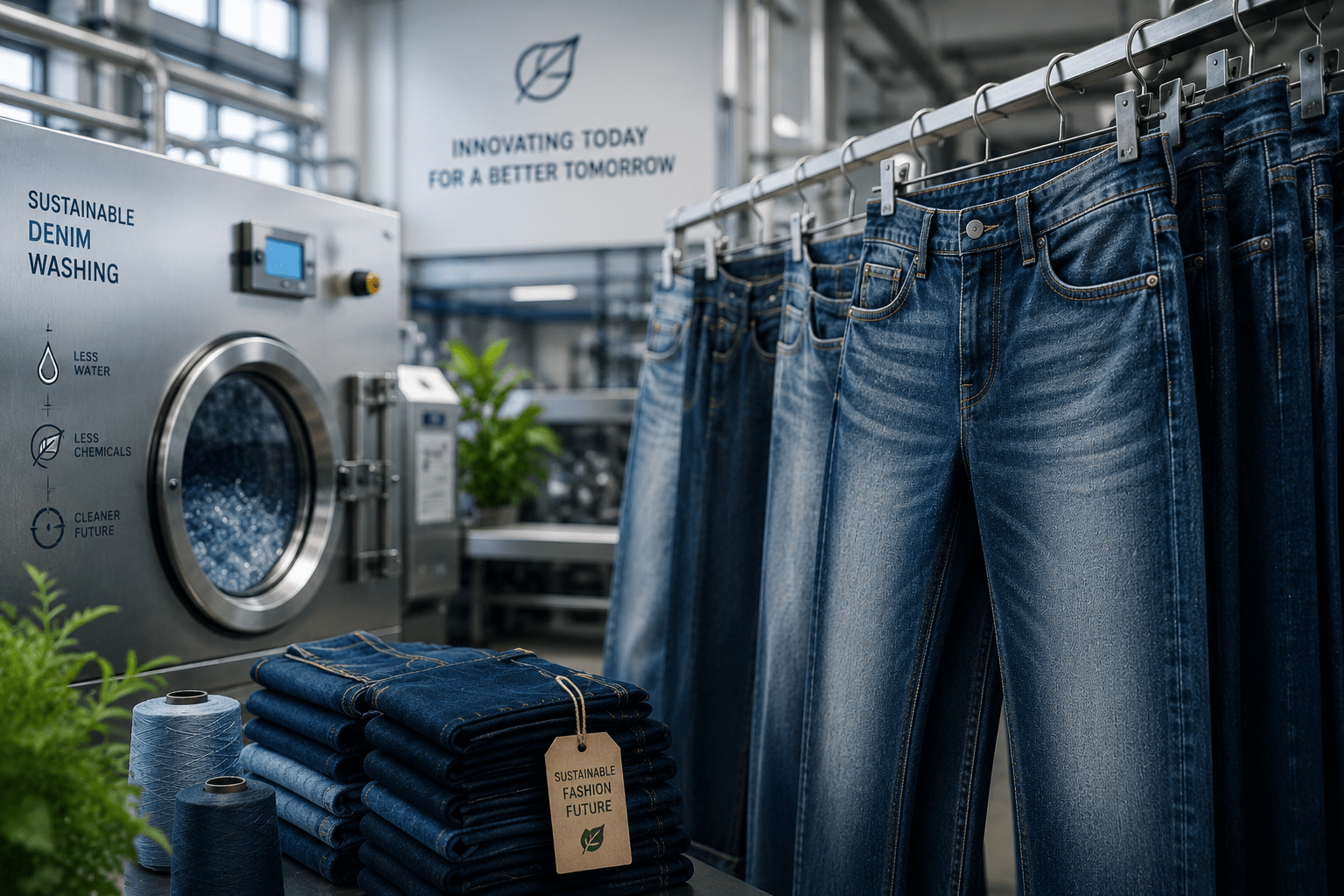
Jeans feel simple. You pull them on, they look worn-in and cool and that's it. But behind that faded, lived-in look sits one of the most water-heavy, chemical-heavy steps in the entire fashion industry: denim washing.
For decades, that process barely changed. Now it's changing fast. Brands, mills and manufacturers are rethinking denim washing techniques from the ground up, swapping stone washing and harsh chemicals for smarter, cleaner tech.
This shift toward sustainable denim washing isn't a small trend, it's quickly becoming the new standard for how jeans get made. Here's a simple look at why the old process needs to go, how sustainable denim is washed today and where denim washing is headed next.
Sustainable denim washing is reshaping how jeans are made, cutting water, energy and chemical use while still delivering the faded, worn-in look customers love.
Why Does Traditional Denim Washing Need to Change?
Classic denim washing, think stone washing and heavy chemical treatments, was built for one thing: getting that faded, vintage look onto a pair of jeans. It works, but it comes at a steep cost.
A single pair of jeans can use dozens of litres of water just for washing and rinsing. Add in the energy needed to run machines and dryers, plus chemicals like bleach and potassium permanganate and you start to see the real environmental price tag.
Stone washing also physically wears down the cotton fibres, which means the jeans don't just look worn, they actually wear out faster.
None of this is a secret anymore. Regulators, retailers and customers are all asking the same question: Why are we still washing denim like it's the 1980s?
That pressure is exactly what's pushing the industry toward low water denim washing and cleaner alternatives.
What Are Sustainable Denim Washing Techniques?
Sustainable denim washing techniques are simply modern denim washing methods designed to get the same faded, distressed or vintage finish, but with far less water, energy and chemical use.
Instead of relying on stones, bleach and endless rinsing cycles, these methods use gas, light, enzymes or advanced machinery to do the same job smarter.
The end result looks the same to the customer. A worn-in pair of jeans still looks worn-in. What's different is everything happening behind the scenes, less water down the drain, fewer harsh chemicals in the process and a smaller footprint per pair.
This is why "sustainable" and "modern" have basically become the same word when it comes to denim finishing today.
The Most Innovative Sustainable Denim Washing Technologies
This is where things get genuinely exciting. A handful of technologies are leading the latest sustainable denim washing techniques and each one tackles the water and chemical problem in its own way.
Laser Washing
Laser washing denim uses a focused laser beam to burn off the surface of the fabric in precise patterns, creating whiskers, fades and distressing without touching a drop of water.
A designer can basically "draw" the exact wash pattern they want, and the laser reproduces it consistently across every single pair.
Because there's no water and no chemicals involved, laser finishing is one of the cleanest options available today. It's also incredibly precise, which is a big win for brands that want a consistent look across large production runs.
Ozone Washing
Ozone washing denim uses ozone gas instead of chemical bleach to lighten and fade the fabric.
The gas reacts with the indigo dye and fades it, giving that classic washed-out look, without the toxic runoff that traditional bleaching leaves behind.
It's fast, it's effective and it dramatically cuts down the use of harsh chemicals like potassium permanganate. For brands chasing eco-friendly denim finishing methods, ozone washing is often one of the easiest wins.
Enzyme Washing
Enzyme washing denim swaps out pumice stones for bio-based enzymes that gently break down the fabric's surface fibres.
This softens the denim and creates that authentic worn-look, without the aggressive mechanical damage that stone washing causes.
It's gentler on both the fabric and the environment and it tends to extend the life of the garment, since the fibres aren't as beaten up in the process.
E-Flow Technology
E-flow denim technology is one of the most water-saving denim production methods out there.
It mixes air with a tiny amount of water to create a kind of foam that carries the dye or finishing agents onto the fabric.
Instead of soaking garments in huge water baths, the foam does the work using a fraction of the water. Some e-flow systems cut water use by up to 90% compared to traditional washing.
Nano Bubble Washing
Nano bubble denim washing uses microscopic bubbles, far smaller than what you'd see in a regular wash, to carry chemicals and dyes deep into the fabric more efficiently.
Because the bubbles are so small, they penetrate the fibres better, which means less chemical is needed to get the same result.
This technology is still emerging, but it's a strong example of how sustainable jeans manufacturing keeps finding smarter ways to do more with less.
Air Wash Technologies
Air wash techniques use controlled air pressure and airflow, instead of water, to distress and soften denim.
Combined with other dry processes, air washing helps mills cut water use even further while still achieving texture and softness in the fabric.
It's a smaller piece of the puzzle, but paired with laser and ozone systems, it rounds out a nearly waterless finishing line.
Comparing Sustainable Denim Washing Methods
No single technique does everything, so most sustainable denim producers combine two or three methods depending on the finish they need.
- Laser washing is best for precise, consistent designs like whiskering and fading patterns, with zero water use.
- Ozone washing is ideal for an overall lightened, faded base colour, quickly and with far fewer chemicals.
- Enzyme washing works well when the goal is a soft hand-feel and an authentic vintage texture.
- E-flow and nano bubble technology are the go-to choices when water saving denim production is the top priority.
- Air wash is often used as a finishing touch alongside the other methods to add softness without extra water.
For brands building a collection, the right combination usually comes down to the finish you want, your sustainability targets, and how much production volume you're running.
A manufacturer experienced in sustainable apparel manufacturing can usually recommend the right mix rather than forcing one technology to do the whole job.
What Buyers Look for in Sustainable Denim Manufacturers
When buyers evaluate a denim manufacturer today, sustainability credentials sit right alongside price and quality.
A few things buyers typically look for:
- Clear data on water and chemical use per garment, not just marketing claims.
- Access to laser, ozone or enzyme-based finishing lines rather than only traditional stone washing.
- Certifications that verify responsible chemical use and environmental practices.
- Consistency, sustainable methods still need to produce the exact wash and finish the brand designed.
- Transparency about where and how the washing actually happens in the supply chain.
Manufacturers who can show real numbers, not just buzzwords, tend to win the long-term partnerships.
This is part of a much bigger denim sustainability trend where "greener" claims are increasingly expected to come with proof.
The Future of Sustainable Denim Washing
The future of sustainable denim washing is heading toward almost waterless production lines, where laser, ozone, e-flow and enzyme systems work together instead of separately.
Expect to see more mills investing in fully automated, data-tracked finishing lines that can log exactly how much water, energy and chemical went into every single pair of jeans.
AI-assisted design is also starting to play a role, helping laser systems generate distressing patterns faster and with even less trial and error.
Combine that with growing pressure from regulation and conscious consumers, and it's clear these denim washing innovations aren't a passing phase. They're the direction the entire denim industry is moving in.
For brands, the takeaway is simple: partnering with manufacturers who've already invested in these technologies isn't just good for the planet, it's quickly becoming the baseline expectation.