How Climate Change Is Impacting Cotton and Textile Production?
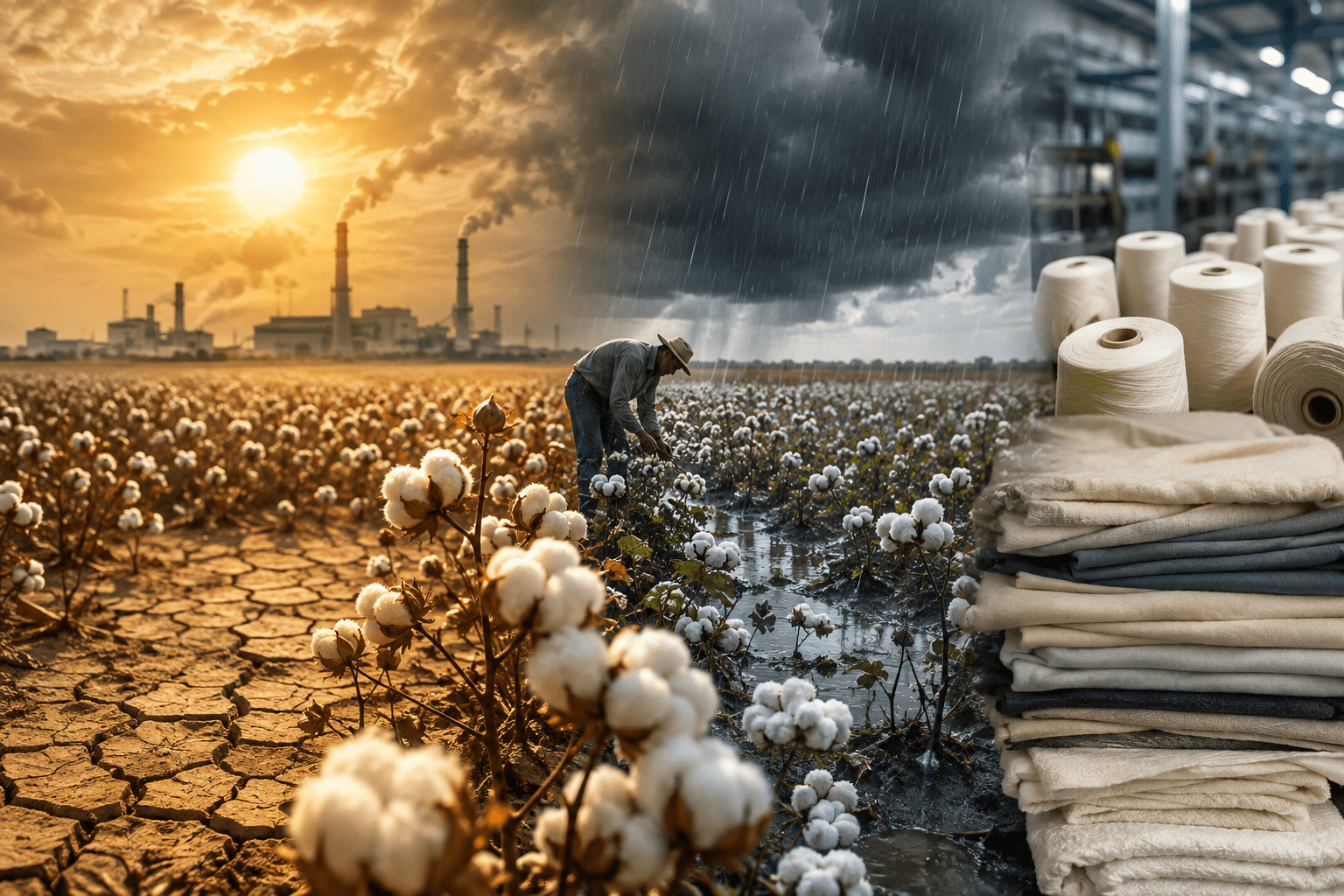
Look, cotton feels like the safest, most predictable thing in our line plan. It's soft, easy to work with, and customers love it. But it’s easy to forget a basic truth: before it's a roll of fabric sitting in a sewing line, it's just a plant in the ground. And right now, the weather in those growing zones is getting harder to predict every single year.
If you’re running sourcing, merchandising, or production, climate issues aren't just something to read about in sustainability reports. They're hitting our bottom line right now through sudden price jumps, unpredictable lead times, and quality variations that mess with our finishing. Planning collections two years out used to be about trend forecasting; today, it feels a lot more like managing risk.
Here’s what is actually happening on the ground, why it matters for our supply chain, and how we need to adapt.
Why Cotton Is Right in the Danger Zone
Cotton takes up about 2.5% of global farmland across dozens of countries. That scale is great for volume, but it means the crop is constantly exposed to wild weather. The plant is surprisingly finicky. Right when it flowers and forms bolls—the exact moment the fiber itself actually grows—it needs steady, predictable conditions. A two-week heatwave or a sudden unseasonal downpour can ruin the staple length and fiber strength of an entire harvest.
- Extreme Heat: When nights stay hot, the plant burns energy just trying to survive instead of growing long, strong fibers. That means weaker yarn and more breakage during spinning.
- Pest Surges: Milder winters mean bugs like aphids and whiteflies don't die off. They hit the fields earlier and in bigger numbers.
- Shorter Growing Windows: Heat can force the plant to mature too fast. It sounds like a quick crop, but it usually leaves us with short, coarse fibers that don't take dye as well.
Climate disruption is no longer just an environmental concern—it is creating real sourcing risks through higher prices, unpredictable lead times, and inconsistent cotton quality.
The Water Problem: Droughts Followed by Floods
Cotton has always needed plenty of water, but the real issue now is timing. Farmers used to count on predictable rain cycles. Now, they get hit with months of dry heat, followed by sudden, violent rains.
Drought starves the crop, while heavy flooding rots the bolls right on the branch and leaves harvesting equipment stuck in the mud.
What's Happening in the Field
Sustained Heatwaves
Lowers fiber yield and quality, leading to higher yarn breakage and lower fabric yields.
Unpredictable Rains
Destroys soil and ruins harvest timing, creating missed delivery windows and factory delays.
Drying Groundwater
Forces expensive irrigation, increasing the cost per kilo for raw lint.
When local water supplies get tight, cotton farms end up competing with local towns and food crops for water. That isn't just an environmental issue—it directly pushes up raw material spot prices.
How Farm Problems Hit Our Production Lines
When a harvest fails in Texas, India, or Pakistan, the ripple effect reaches us fast:
- Price Spikes: If global supply drops even a few percentage points, raw cotton futures jump. Mills pass those costs down, which throws off our target FOBs mid-season.
- Logistics Roadblocks: Severe weather knocks out roads, floods local ports, and cuts power to processing facilities, adding weeks to our lead times.
- Quality Inconsistencies: When high-grade long-staple cotton is hard to find, mills start blending lower-grade fibers. That changes the hand-feel, increases pilling, and messes with dye consistency across dye lots.
How We Need to Adapt
We can't just cross our fingers and hope for a good harvest season. Smart sourcing teams are already shifting their strategy:
- Diversify the Supply Base: Don't rely too heavily on a single growing region. If one area gets hit by a bad drought, you need pre-qualified vendors in another region ready to take up the volume.
- Look at Regenerative Practices: Farmers using cover crops and low-till methods have healthier soil that holds moisture during dry spells and prevents runoff during heavy rains. Those farms simply bounce back faster.
- Smarter Fiber Mixes: Mixing virgin cotton with recycled cotton, Tencel, or hemp takes the pressure off virgin supply without sacrificing the soft feel customers expect.
- Low-Water Processing: Working with mills that use waterless dyeing or closed-loop recycling reduces our overall footprint and protects operations in regions where water is tight.
The Bottom Line
Building a resilient supply chain isn't about chasing a sustainability badge—it's about operational survival.
Going forward, the brands that succeed won't necessarily be the ones pushing for the lowest upfront cost per piece. They'll be the ones with deep visibility into their supply chain, strong regional diversification, and long-term relationships with suppliers who know how to keep producing, no matter what the weather does.