Can AI Predict the Next Fashion Bestseller Before It Hits the Runway?
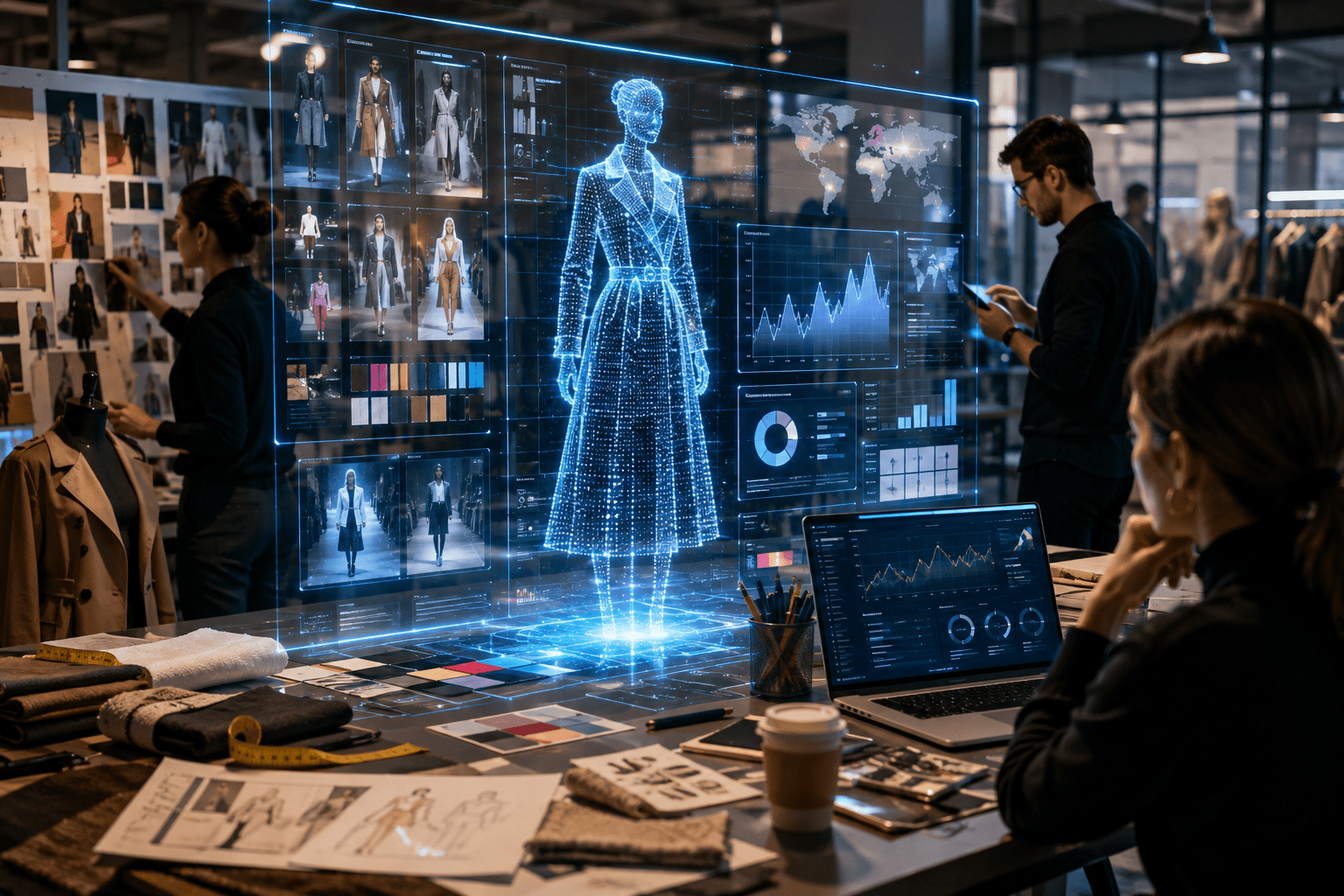
Somewhere in a data centre right now, a model is quietly scanning thousands of Instagram posts, TikTok clips and search queries, trying to work out whether cargo pockets are about to come back before a single designer has cut a single pattern. That's not science fiction anymore, it's just Tuesday for a lot of merchandising teams.
For decades, predicting the next big fashion trend was mostly instinct, a buyer's gut feeling backed by years of experience, a trend forecaster's carefully compiled seasonal report and a fair amount of educated guessing. Now there's a genuinely serious contender in the room: AI fashion forecasting, systems that chew through social data, search behaviour and sales history looking for patterns humans would take months to spot, if they spot them at all.
So can it actually work? Can a model genuinely flag the next bestseller before it's even hit the runway? Let's get into what these systems can actually do, where they fall short, and what that means for anyone buying or building collections right now.
AI can spot the early signals of a coming trend faster than any human team ever could, but turning that signal into an actual bestseller still takes judgement no algorithm has quite figured out yet.
Why Fashion Forecasting Is Changing
The old forecasting model was built for a slower industry. Seasonal drops, long lead times, trends that built gradually enough for a forecaster to catch them with a well-timed report six months out. That world barely exists anymore.
New products hit the market every week now, trend windows have compressed dramatically, and a silhouette can peak and fade within a season instead of lingering for years. Historical averages, the backbone of traditional forecasting, carry almost no predictive weight in a market moving this fast.
That's really the whole reason fashion demand forecasting has had to change so quickly, the old tools simply weren't built for a consumer base that moves on faster than most planning cycles can track.
From Trend Forecasting to Demand Prediction
There's an important distinction hiding inside all of this that's easy to miss. Trend forecasting asks "what style is coming next." Demand prediction asks something much more specific and commercially useful: "how many units of this exact style, colour and size are we actually going to sell, and where."
Those are genuinely different questions, and AI has gotten remarkably good at the second one.
Reading Signals Before They Become Trends
The interesting part is how early some of these signals show up. Long before a style becomes a visible trend, there are small, scattered signs, a slight uptick in a specific search term, a handful of niche accounts posting a particular silhouette, early engagement patterns on certain colour combinations.
Most of it is invisible to a human scrolling casually. To a model built to spot statistical anomalies across millions of data points, it's exactly the kind of signal that stands out.
What AI Can Analyse
Modern fashion forecasting tools pull from a genuinely wide net, image recognition scanning visual style across social platforms, natural language processing tracking sentiment and search behaviour, and demand models layered on top of actual sales and inventory data.
Some systems even fold in supplier performance and logistics data now, extending prediction beyond "what will sell" into "how fast can we actually get it made and delivered."
How AI Predicts Potential Fashion Bestsellers
Underneath the marketing language, most fashion demand prediction tools are combining a few distinct data streams to build their picture.
Search, Social Media and Consumer Behaviour
Search trends and social engagement tend to move first, since they capture genuine interest before anyone's actually bought anything. AI systems track this at a level of detail no human team could manage manually, monitoring shifts in colour palettes, silhouettes and fabric mentions across enormous volumes of posts and searches, essentially in real time rather than in a quarterly report.
Sales, Product and Market Data
Once a product actually exists, sell-through rate, price sensitivity, and channel-specific performance data all feed back into the model. This is where things get genuinely granular, some platforms now forecast at the style-colour-size-channel level, treating each combination as its own demand signal with its own lifecycle, rather than lumping an entire category together the way older, blunter forecasting tools used to.
Can AI Really Predict a Fashion Bestseller?
Here's the honest answer: sort of, and increasingly well, but "predict" is doing a lot of work in that sentence.
Where AI Has an Advantage
AI's real edge is speed and scale. It can process volumes of social, search and sales data that would take a human team weeks to work through, and it does it continuously rather than in scheduled seasonal bursts.
Some newer prediction engines can even forecast demand for entirely new products with no sales history at all, purely by analysing image and text data against patterns learned from thousands of past launches, reportedly improving forecast accuracy by a meaningful margin over traditional methods.
Brands using these tools have reported measurable gains in full-price sell-through, which is about as concrete a proof point as this category gets.
Where Human Expertise Still Matters
What AI still struggles with is context, cultural nuance, timing sensitivity, the kind of instinct a seasoned buyer develops after years of watching trends rise and fall in the real world.
A model can tell you a silhouette is gaining traction online. It can't always tell you whether that traction will translate into someone actually buying it in a specific market, at a specific price point, in a specific season.
That gap is exactly why most serious forecasting platforms keep a human decision point built into the process rather than letting the model run the whole show unsupervised.
From Prediction to Product: How AI Could Influence Fashion Development
The more interesting shift happening now is prediction feeding directly back into product development, not just sitting in a slide deck after the fact.
Generative AI tools are increasingly used to sketch design variations based on what the data suggests is gaining traction, giving design teams a genuine head start rather than a cold blank page.
This changes the rhythm of development meaningfully. Instead of designing a collection and hoping demand data proves them right months later, teams can start with a data-informed hypothesis and design toward it, testing and adjusting earlier in the process when changes are still cheap to make.
What AI-Powered Forecasting Means for Fashion Buyers
For buyers specifically, this technology is less about predicting a single viral hit and more about making the everyday buying process meaningfully smarter.
Smarter Buying and Assortment Decisions
Rather than buying broad and hoping something sticks, AI-assisted forecasting lets buyers commit more confidently to narrower, better-informed assortments, backed by real signal rather than gut feel alone.
That confidence tends to show up directly in tighter initial buys and fewer wasted units sitting on a rack nobody wants.
Reducing Inventory and Overproduction Risk
Overproduction remains one of fashion's most persistent and expensive problems, and this is where AI forecasting earns its keep most clearly.
Better demand prediction means fewer units produced that never sell, fewer markdowns, and a meaningfully lower environmental footprint from unsold stock.
For buyers under real pressure to source more sustainably, that's not a small side benefit, it's becoming one of the strongest business cases for adopting these tools in the first place.
The Limitations of AI Fashion Forecasting
None of this is magic, and it's worth being honest about where it falls short.
These models are trained on existing data, which means they're naturally better at predicting evolution than genuine disruption, a slightly different take on an existing trend is far easier to forecast than something entirely unprecedented that has no real historical pattern to learn from.
There's also a real risk of models simply reinforcing what's already popular, amplifying existing trends rather than genuinely spotting new ones, since that's fundamentally what pattern recognition on historical data is built to do.
And plenty of teams have run into the opposite problem too, a technically accurate forecast that nobody on the merchandising team actually trusts enough to act on, which makes the prediction essentially useless regardless of how good the underlying math is.
The Future of Fashion Forecasting
Where this is heading looks like deeper integration rather than replacement. Expect AI to keep handling the heavy data processing, scanning, pattern spotting, flagging anomalies, while humans stay firmly in control of the actual decisions that follow.
Several current platforms are explicitly built this way already, AI running the analysis autonomously, but a human gate sitting right at the point where a real commercial decision gets made.
Expect forecasting to also get more localised over time too, factoring in regional and cultural context rather than treating global demand as one uniform signal, which is still a fairly underdeveloped area even in the more advanced tools available today.
Conclusion: AI May Predict Demand, But Fashion Still Needs Human Judgement
So, can AI predict the next fashion bestseller before it hits the runway? Genuinely, yes, more often and earlier than most people would expect.
It's remarkably good at spotting the early signals, and increasingly good at turning those signals into usable demand numbers buyers can actually plan around.
What it can't do, at least not yet, is replace the judgement that turns a promising signal into an actual commercial hit, understanding cultural nuance, timing a launch correctly, knowing when a trend genuinely fits a brand versus when it's just noise.
The strongest forecasting right now isn't AI instead of human expertise, it's AI handing a sharper, earlier signal to people who still know exactly what to do with it.