Why Fashion Brands Are Designing for the Second Sale, Not Just the First
There's a question a lot of designers never used to ask themselves. Not "will someone buy this?" but "will someone still want this in three years, from somebody else?"
For most of modern fashion history, that question didn't really matter. A garment was made, sold, worn, and eventually thrown out. What happened after the first sale was somebody else's problem, if it was anybody's problem at all. The brand's job ended at the till.
That's genuinely changing now, and it's changing for practical reasons rather than purely idealistic ones. Resale has become a real market with real money in it, and a garment's second-hand value is starting to feed back into how people judge whether the first purchase was worth it.
Brands have noticed. Some are now designing with that second sale in mind from the very beginning. Here's what that actually involves, and why it's reshaping decisions well before anything reaches a shop floor.
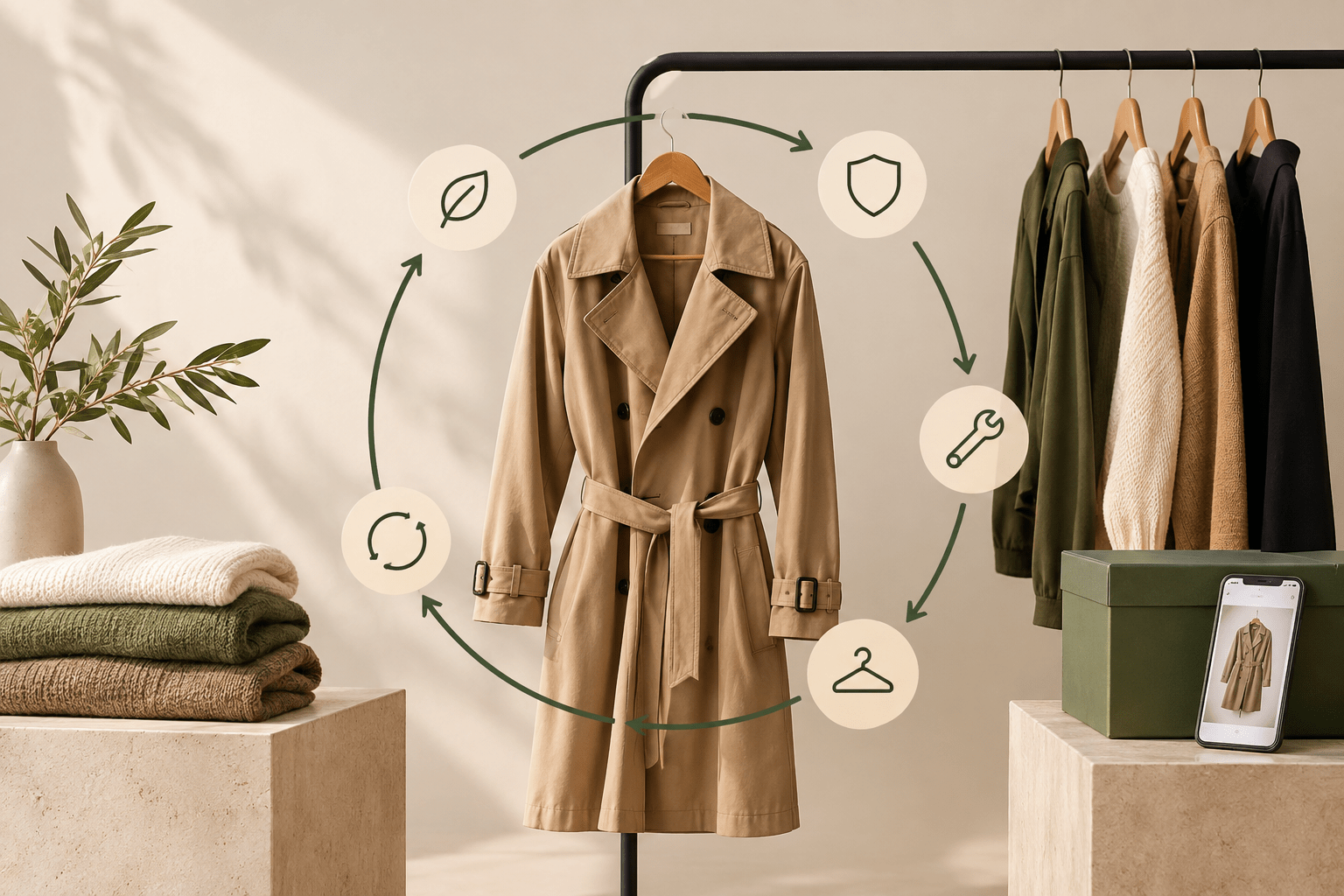
Designing for resale means creating garments with durability, repairability, quality and long-term desirability built in from the very beginning.
Why Fashion Resale Is Changing the Industry
Second-hand fashion used to sit at the edges of the industry: charity shops, vintage markets, the occasional car boot sale. It wasn't something most brands thought about seriously, and it certainly wasn't something they participated in.
That's shifted considerably. Resale platforms have made buying pre-owned about as easy as buying new, and a whole generation of shoppers now checks the second-hand market before paying full price for anything.
The fashion resale market in the UK has grown substantially on the back of that behaviour, and it's no longer a niche corner of the industry. What's really interesting is how it's changed the way people evaluate a purchase.
If a coat holds most of its value and can be resold later, the actual cost of owning it drops. That calculation, quietly, is influencing which brands people trust with their money in the first place.
What Does Designing for Resale Mean?
Designing for resale means making product decisions with the garment's whole life in mind, not just its first owner. It's a shift in the question being asked at the design stage.
Instead of asking only whether something will sell now, brands start asking:
- Will this still look good after fifty wears, not five?
- Will the fabric hold its shape, colour and structure over time?
- Can this be repaired if something goes wrong, or is it finished?
- Will this style still feel wearable in a few years, or is it locked to a trend?
That's the core of circular fashion design. It doesn't mean designing boring, safe product forever. It means being honest about which pieces are built to last and making sure those ones actually do.
How Resale Is Changing Fashion Product Design
Designing for Durability and Longevity
Garment durability moves from a nice-to-have to a genuine design priority here. Seam strength, stitch density, reinforcement at stress points, hardware that doesn't fail after a season, all of it matters far more when a garment is expected to have a second owner.
A piece that falls apart in eighteen months has no resale value at all. A piece that still looks good after five years holds real value, and both outcomes are decided at the design and manufacturing stage rather than by luck.
Choosing Materials That Retain Value
Some fabrics age well. Others simply don't. Natural fibres and higher-quality blends tend to hold colour, structure and handle far better over time than cheaper synthetic alternatives that pill, thin out or lose shape quickly.
Material choice also affects how a garment washes, how it responds to repair, and whether it still looks presentable after years of wear. Sustainable fashion sourcing decisions made early on end up shaping resale value long after anyone's stopped thinking about them.
Making Garments Easier to Repair and Reuse
Repairability is an underrated part of this. Replaceable buttons, accessible seams, spare thread or fabric supplied with the garment, even simple construction choices that let a tailor take something in or let a hem out.
A garment that can be repaired stays in circulation. One that can't usually ends up discarded at the first real problem, regardless of how good the rest of it still is.
Why Sourcing and Manufacturing Matter to Resale Value
This is where design intent either survives or quietly falls apart. A beautifully considered piece made in a factory cutting corners on stitching won't hold up, no matter how thoughtful the original sketch was.
Sustainable fashion manufacturing decisions, fabric quality, construction standards, finishing, consistency across production runs, are what actually deliver durability in practice.
The specification on paper means very little if the factory isn't genuinely equipped or willing to meet it. That's why brands serious about resale tend to work closely with manufacturers who can demonstrate consistent quality rather than simply quote the lowest price.
It's also why quality control before bulk production matters so much here, because a durability problem caught late is a resale problem baked into thousands of units.
From First Sale to Second Life: How Brands Are Adapting
Plenty of brands have moved past simply acknowledging resale and started participating in it directly. Branded resale platforms, take-back schemes, repair services, and authentication programmes are all becoming more common.
The logic is reasonably straightforward. If a brand's product is going to be resold anyway, being part of that transaction keeps the customer relationship alive, generates additional revenue, and gives the brand control over how its product is presented second-hand.
There's a longer-term benefit too. Someone who buys a brand pre-owned and has a good experience with it is a realistic candidate to buy new later. Resale becomes a way in, not just a way out.
What Designing for Resale Means for Fashion Brands
For brands, this represents a genuine change in how success gets measured. The fashion product lifecycle stops ending at the first transaction and starts being something brands actually have a stake in.
It also raises the bar. Customers who buy with resale value in mind pay closer attention to quality, construction and materials, and they'll notice quickly if the product doesn't hold up the way the marketing suggested it would.
The brands doing well here tend to be the ones treating resale as a design and sourcing question rather than a marketing one. It shows up in the product itself long before it shows up in any campaign.
Conclusion
Designing for resale isn't really about resale platforms or take-back schemes. Those are the visible parts, but the actual work happens much earlier, in fabric choices, construction decisions, and how seriously a brand takes durability when nobody's watching.
What's genuinely shifting is the timeframe brands are designing for. Building something that holds up for one owner is a reasonably low bar. Building something worth owning twice is considerably harder, and increasingly, it's what customers are quietly paying attention to.