How Fashion Brands Are Using Pre-Orders to Reduce Production Risk
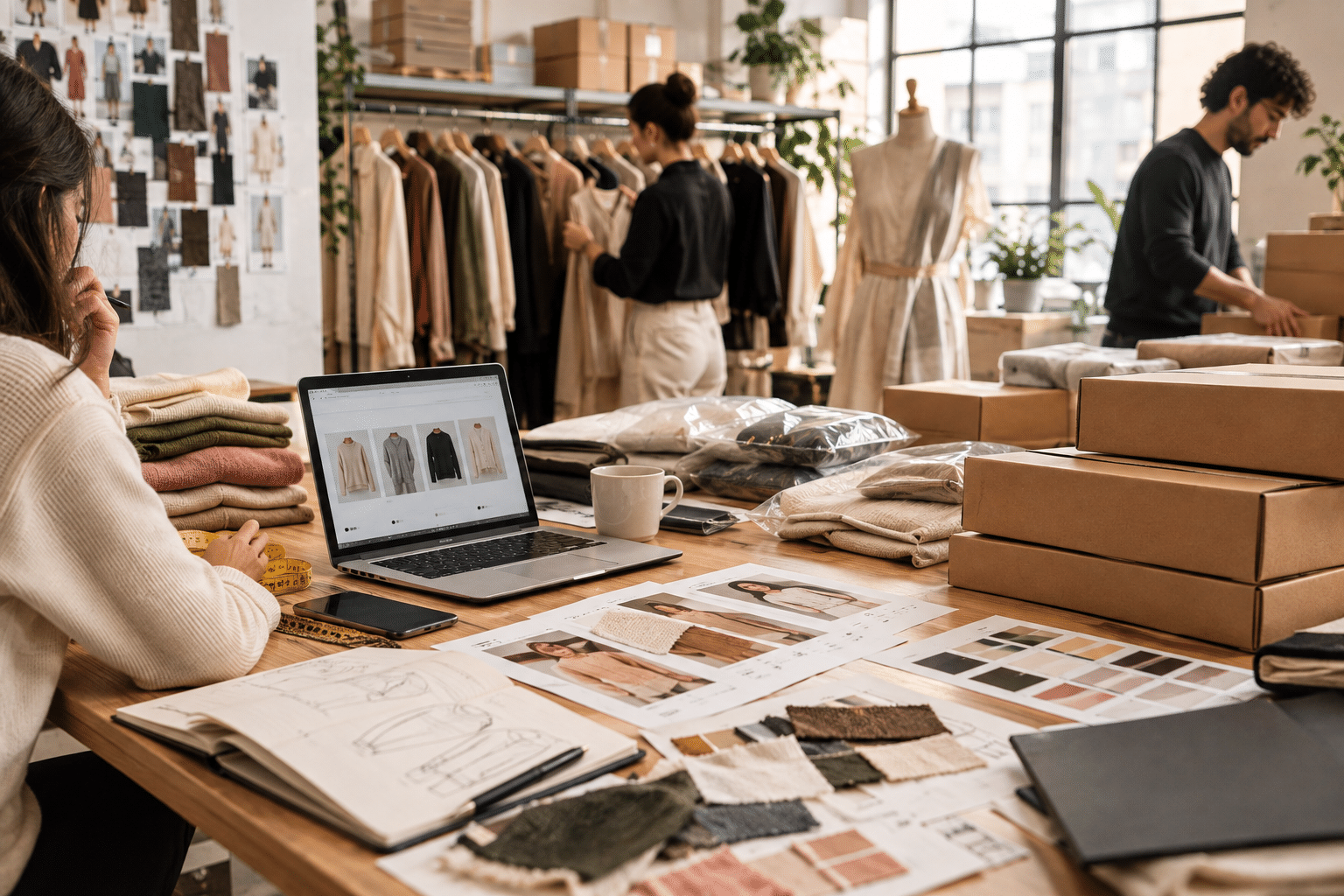
There's a particular kind of dread that comes with placing a big production order months before anyone's actually seen the finished product. You've forecasted demand as carefully as you can, committed to a quantity, paid the deposit, and now you just... wait. Wait to find out if you guessed right.
A lot of fashion brands are getting tired of that wait. Instead of producing first and hoping demand shows up later, they're flipping the order entirely, asking customers to commit first, and producing based on what people have actually said they want.
That's the basic idea behind the fashion pre-order model, and it's quietly becoming one of the more sensible responses to a problem the industry has struggled with for years: making too much of the wrong thing, too early, based on not enough information.
Pre-orders allow fashion brands to produce closer to confirmed customer demand, helping reduce excess inventory and production risk before it starts.
Why Fashion Brands Are Moving Away From Guesswork
Traditional production planning has always involved a fair amount of guessing dressed up as strategy. Forecast demand, commit to a quantity, place the order, and hope the number holds up by the time stock actually arrives.
The problem is that guessing has gotten harder, not easier. Trends move faster, customer behaviour is less predictable than it used to be, and a style that looks promising in a sample meeting doesn't always translate into actual sales months later. Get the forecast wrong, and you're either sitting on excess fashion inventory nobody wants, or scrambling to reorder something that's already sold out.
Pre-orders sidestep a lot of that uncertainty. Instead of predicting demand, brands simply ask for it directly, and then produce against real numbers rather than educated guesses.
How the Fashion Pre-Order Model Works
The mechanics are fairly straightforward, even if the mindset shift behind them is bigger than it first appears.
Design the Product
It starts the same way any collection does: design, fabric selection, sampling, usually in close coordination with manufacturing partners . The difference is what happens next. Instead of moving straight into bulk production, the finished design gets put in front of customers first.
Launch the Pre-Order
The product goes live for a set window, often a few weeks, with clear messaging about what's being offered and when it'll actually arrive. Customers place orders and pay, in full or with a deposit, committing to the purchase before a single unit has been produced.
Measure Customer Demand
This is really the whole point. The pre-order window generates a genuine demand number, not a forecast, not a guess, an actual count of how many people want this specific product in this specific size and colour.
Produce to Confirmed Demand
Production only begins once that number is known. The brand orders roughly what's already been sold, sometimes with a small buffer for exchanges or last-minute browsers, rather than a volume based on hope.
How Pre-Orders Reduce Production Risk
Produce Closer to Real Demand
This is the core benefit, and it's a genuinely significant one. Fashion demand forecasting has always involved a margin of error, and that margin is what leads to both overproduction and stockouts. Pre-orders replace the forecast with an actual number, which collapses that margin considerably and supports stronger traceability in the fashion industry along the way.
Reduce Excess Stock and Markdowns
Excess fashion inventory is expensive in more ways than one; it ties up cash, needs storing, and usually ends up discounted or written off entirely. Producing to confirmed orders instead of a projected quantity removes most of that risk before it even has a chance to happen.
Test New Designs Before Scaling
Pre-orders also work as a genuinely useful testing mechanism. A brand can put a new style in front of customers, see how it performs, and only commit to a larger production run if the demand is actually there. It's a far less expensive way to find out whether an idea works than committing to bulk production and finding out afterwards.
Improve Production Planning
Knowing exact quantities in advance also makes the wider fashion supply chain run more smoothly. Fabric can be ordered more precisely, production slots booked with more confidence, and manufacturers aren't left guessing either.
Pre-Orders Don't Remove Risk: They Shift It
It's worth being honest here, pre-orders aren't a magic fix. They shift fashion production risk rather than eliminating it entirely.
The new risk sits mostly around customer expectations. People placing a pre-order are agreeing to wait, and if that wait stretches longer than promised, or communication goes quiet in the meantime, trust erodes quickly. Brands also take on the operational load of managing payments, order tracking and clear timeline communication, none of which is difficult exactly, but all of which needs to be done properly.
There's also a ceiling on how far this model can stretch. Pre-orders work well for planned collections and considered purchases. They work far less well for impulse buys or fast-moving trend pieces, where customers expect to buy now and receive quickly, not commit and wait.
When Does a Pre-Order Model Make Sense?
The pre-order model tends to suit certain kinds of brands and product types better than others. It works well for considered, higher-price-point pieces where customers are already used to waiting, bridal wear, occasion wear, made-to-measure or premium ready-to-wear.
It also suits brands testing new categories or designs who want real demand signal before committing to bulk production, and smaller or emerging labels who simply can't afford to gamble cash on a large upfront run.
It's a much harder fit for brands built around speed and immediacy, where the entire value proposition is getting product quickly, and where a multi-week wait would undercut the whole appeal.
The Role of the Right Manufacturing Partner
None of this works without a manufacturing partner who can actually operate on this rhythm. A pre-order model depends on manufacturers who can move quickly once real numbers land, often producing in smaller, precise batches rather than one large predictable run.
This is where small-batch fashion production capability genuinely matters. A manufacturer used to only accepting large, fixed-volume orders months in advance isn't well suited to a pre-order-driven brand's needs. Brands making this shift usually need to find partners who are comfortable with flexible order sizes, faster turnarounds, and demand-led production as a standard way of working, not an occasional favour.
Are Pre-Orders the Future of Fashion Production?
Probably not as a total replacement for traditional stock models, but as one tool among several, pre-orders are clearly here to stay. They solve a genuinely persistent problem, fashion overproduction driven by forecasting that simply can't keep pace with how unpredictable demand has become.
What's more likely is a blended approach, core, reliable products kept in ready stock, while newer, riskier or higher-value pieces move through a pre-order model instead. That combination lets brands keep the convenience customers expect for the easy stuff, while genuinely reducing risk on everything else.
The direction of travel is fairly clear either way. Demand-led production, in some form, is becoming a real part of how thoughtful fashion brands are choosing to operate, rather than a workaround they fall back on only when things go wrong.