How Fashion Brands Can Build Transparent Supply Chains in 2026
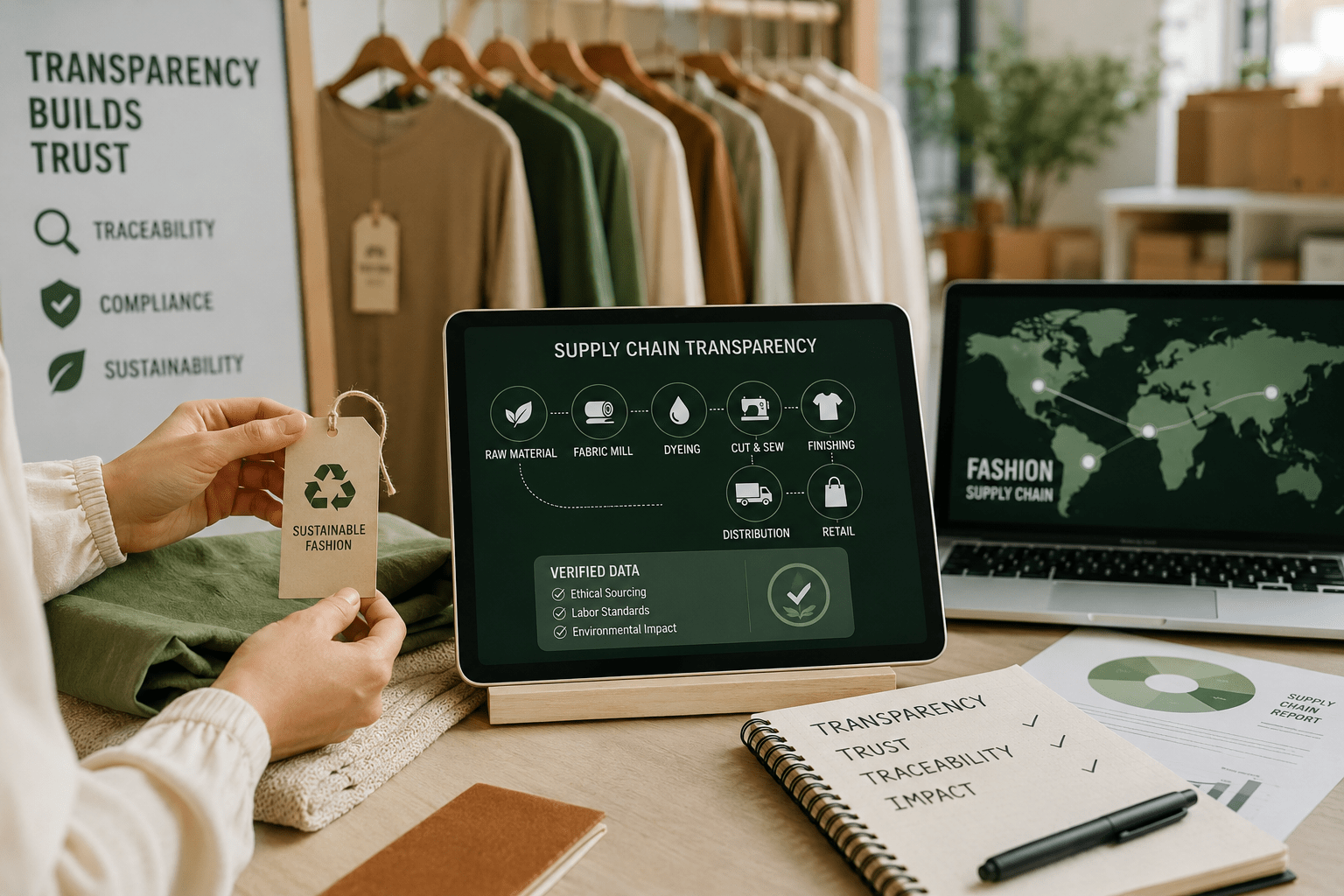
Ever wondered who actually made your clothes and where the fabric came from before that? A few years ago, most brands couldn't fully answer that question either. In 2026, that's no longer good enough.
Consumers, regulators and retail partners all want the same thing now: proof, not promises. That's exactly what a transparent fashion supply chain is built to deliver.
Building a transparent supply chain isn't about having nothing to hide. It's about being able to show, with confidence, exactly what happened at every stage of making a garment.
What Is a Transparent Fashion Supply Chain?
In simple terms, fashion supply chain transparency means being able to trace and prove where materials came from, who made the garment and how it got from fibre to finished product.
It's not just about the factory stitching the final piece. A truly transparent fashion supply chain covers:
- Fabric mills and fibre sourcing
- Dye houses and finishing units
- Labour practices at every tier
- Environmental impact along the way
Most brands only have visibility into their first-tier suppliers. Real traceability in fashion means mapping deeper, tier two and tier three, where risks are often highest but least visible.
Why Supply Chain Transparency Matters in Fashion
Supply chain transparency has moved from a nice-to-have to a genuine business need.
Here's why it matters so much right now:
- Customers want proof of ethical and sustainable sourcing.
- Regulators are demanding documented, verifiable data.
- Retail partners are asking harder questions before placing orders.
- Brands with strong fashion traceability recover faster from supply chain issues.
Brands that treat this as a checklist item tend to struggle. Brands that build it into how they operate tend to lead their category.
Key Components of Fashion Supply Chain Transparency
Verbal assurances aren't enough anymore. Building real supplier visibility means working with manufacturing partners who maintain detailed, verifiable records, not just good intentions.
That includes:
- Material origin and certification documents.
- Labour practices and factory audit reports.
- Environmental data, like water usage and emissions.
- Production timelines and batch-level records.
Manufacturers who can produce this information on request, instead of after weeks of follow-up, are the ones brands are increasingly choosing for ethical sourcing.
How Technology Improves Supply Chain Visibility
Spreadsheets and email chains simply can't keep up with a global apparel supply chain anymore.
More brands are turning to digital tools, from blockchain-based tracking to supplier management platforms, to record and verify data at every stage of production. One of the most talked-about tools right now is the Digital Product Passport, a digital record attached to a product that captures its materials, origin, and journey through the clothing supply chain.
These tools don't replace strong supplier relationships. They support them, giving brands real-time supply chain traceability instead of relying on periodic reporting.
Regulatory Requirements Brands Should Know
Regulations around supply chain compliance are tightening fast, especially across Europe and North America.
One of the biggest shifts is the rollout of the Digital Product Passport for fashion, which will require brands to document a product's full journey, from raw material to finished garment, in a format regulators and even customers can access.
Brands that build traceability in the fashion industry into their operations now won't be scrambling to comply later. This means working with manufacturing partners who already maintain the kind of documentation regulators are beginning to require.
Benefits of Transparent Fashion Sourcing
The benefits of supply chain transparency in fashion go beyond ticking a compliance box.
Brands that get this right tend to see:
- Stronger customer trust and loyalty.
- Fewer surprises during audits or recalls.
- Easier, faster fashion sourcing decisions.
- A real head start on upcoming regulations.
Challenges in Building a Transparent Supply Chain
None of this happens overnight, and it's worth being honest about that.
Common hurdles brands run into:
- Getting visibility past tier-one suppliers.
- Standardising documentation across different manufacturers.
- Balancing honest communication without overpromising results.
- Keeping up with fast-changing regulations across markets.
Being transparent doesn't mean claiming perfection. It means being honest about progress, including the parts still being worked on. Overstating progress carries a reputational risk that's far harder to undo.
How Fashion SVP Supports Transparent Fashion Sourcing
At Fashion SVP, we believe transparency starts with the partnerships brands build, not just the policies they publish. Our vetted network of manufacturers and suppliers is built around supplier transparency in apparel manufacturing, from verified certifications to consistent, documented production practices.
We connect brands with transparent sourcing partners who understand that transparency isn't a burden. It's the foundation for long-term, scalable relationships built on trust.
Future of Fashion Supply Chain Transparency
Building a sustainable fashion supply chain will only become more essential as regulations tighten and customer expectations rise further. Brands that invest in visibility, documentation, and honest communication today will be far better positioned to adapt as the industry keeps evolving.
In 2026 and beyond, transparency won't simply be a compliance requirement. It will be one of the clearest signals of a brand's long-term credibility, and one of the smartest investments a fashion business can make.