The New Fashion Supply Chain Is Built for Speed, Not Scale
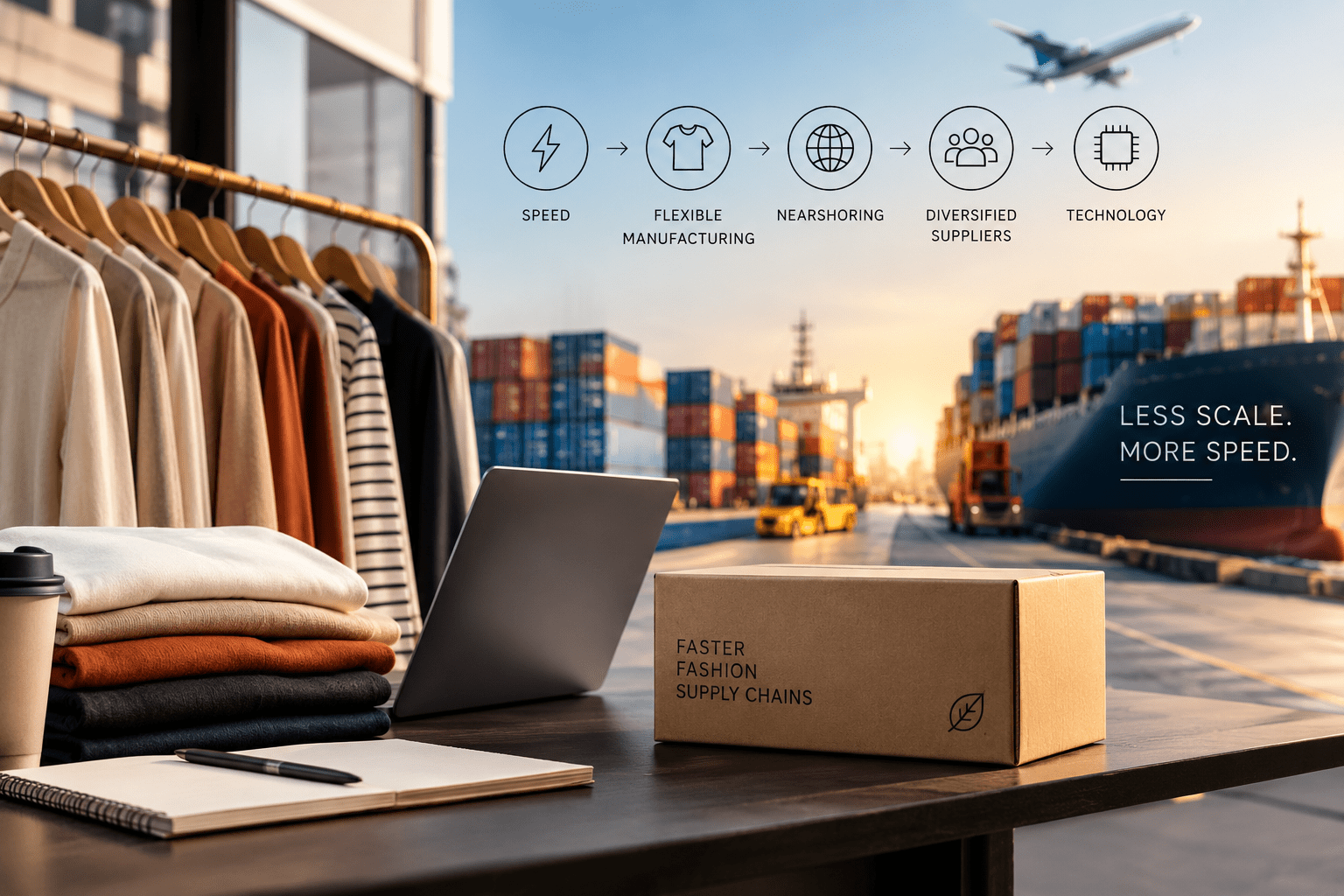
For a long time, the goal in fashion sourcing was pretty simple: get bigger. Bigger orders, bigger factories, lower cost per unit. Scale was the whole strategy, and if you could produce more for less, you were doing it right. Nobody really questioned that. Then things started going wrong in ways the old model had no answer for. Containers stuck at ports. Lead times stretching from weeks into months. Warehouses full of stock that was ordered eight months earlier for a trend that had already come and gone. Suddenly, being able to produce 50,000 units cheaply mattered a lot less than being able to produce 500 units quickly. That shift is still happening, and it's reshaping how brands think about sourcing, manufacturing, and supplier relationships from the ground up. Here's what's actually changing, and what it means if you're the one making these decisions.
Why Fashion Supply Chains Are Shifting From Scale to Speed
The scale-first model made sense when demand was predictable. Two seasons a year, forecasts made well in advance, and customers who largely bought what was put in front of them. Under those conditions, committing to huge volumes months ahead was a reasonable bet. That predictability has gone. Trends move faster, customers buy in smaller and more frequent bursts, and a style can go from quiet to sold out in a fortnight. Forecasting eight months ahead in that environment isn't planning; it's guessing, and the cost of guessing wrong is a lot higher than the savings from ordering in bulk.
There's also the simple fact that unsold stock is expensive. Discounting it, storing it, or writing it off eats straight into margin. A brand that ordered exactly what it needed, slightly later, often ends up better off than one that ordered cheaper and far too much. That's really the heart of current fashion supply chain trends. Speed isn't replacing efficiency, it's becoming the new definition of it.
What an Agile Fashion Supply Chain Looks Like
An agile supply chain looks quite different from a traditional one, and the differences show up in a few specific places:
- Shorter production runs, ordered more frequently rather than all at once.
- Reorder ability, so a bestseller can be topped up in weeks, not months.
- Multiple suppliers across different regions rather than one large partner.
- Decisions made closer to the point of sale, based on real data.
- Room to adjust mid-season instead of locking everything in upfront.
None of this means abandoning planning altogether. It means building a system where plans can change without everything falling apart, which is a genuinely different way of approaching fashion supply chain management.
The Rise of Flexible Fashion Manufacturing
Manufacturers have noticed this shift too, and a growing number have adapted to it. Flexible fashion manufacturing generally means lower minimum order quantities, faster sampling, and the ability to handle smaller repeat runs without penalising a brand for not ordering in bulk.
For smaller and mid-sized brands especially, this has changed what's actually possible. Testing a new style used to mean committing to thousands of units and hoping. Now it can mean producing a few hundred, seeing how they sell, and scaling up only if the response justifies it. That's a much less risky way to grow, and it's why flexibility has become a genuine selling point for manufacturers rather than something they simply tolerate.
How Nearshoring Is Making Fashion Supply Chains Faster
A big part of this speed shift comes down to geography. Nearshoring fashion production, moving manufacturing closer to where a brand actually sells, cuts weeks off shipping time before anything else in the process even changes. For UK and European brands, that usually means Turkey, Portugal, Morocco, or parts of Eastern Europe. The unit cost is often higher than offshore alternatives, but the gap narrows considerably once you account for shipping, duties, and the cost of holding extra stock to cover long lead times.
Closer factories are also easier to visit, easier to communicate with, and far quicker to resolve problems with. When something goes wrong in production, a same-day conversation beats a three-day email chain every single time.
Why Supplier Diversification Matters
Relying on one supplier, or one region, worked fine right up until it didn't. A single port closure, factory shutdown, or regional disruption could take an entire season's production down with it, and plenty of brands learned that the hard way.
Supplier diversification in fashion spreads that risk out. Working across multiple manufacturers and multiple regions means a problem in one place doesn't stop everything. It also gives brands more negotiating room and more options when timelines get tight. It's more work to manage, there's no pretending otherwise, but the resilience it buys is difficult to replicate any other way.
The Role of Technology in Faster Fashion Supply Chains
Technology is quietly doing a lot of the heavy lifting behind this shift. Digital sampling cuts weeks out of development by reducing the number of physical samples that have to be shipped back and forth. Real-time sales data tells brands what's selling now rather than what sold last quarter. Better inventory visibility means brands know exactly what they have, where it is, and when it needs replenishing, which makes smaller, more frequent ordering genuinely manageable rather than chaotic.
None of this replaces good supplier relationships, but it makes fast decision-making possible in a way that simply wasn't realistic a decade ago.
How Fashion Brands Can Build a More Agile Supply Chain
Moving toward a faster supply chain doesn't happen in one go, and it shouldn't. A few practical starting points:
- Audit your current lead times honestly, from order placed to stock on shelf.
- Identify which styles genuinely need speed and which don't.
- Start conversations with manufacturers who offer lower MOQs and faster sampling.
- Test a nearshore supplier on a small run before shifting anything major.
- Build in reorder capability for core products rather than one-off bulk buys.
- Use actual sales data to guide buying decisions rather than forecasts alone.
Most brands find the sensible route is a gradual rebalance rather than a complete overhaul. Keep what works, and shift the parts of the range that genuinely benefit from speed.
What This Shift Means for Fashion Buyers and Sourcing Teams
For the people doing the actual buying, this changes the job. Sourcing decisions are made more often and in smaller increments, which means more frequent supplier conversations and less reliance on a single big seasonal commitment.
Supplier relationships matter more too. When you're reordering monthly rather than twice a year, you need partners who respond quickly and communicate clearly, not just ones who quoted the lowest price.
And the definition of a good sourcing decision has shifted. Lowest unit cost isn't automatically the win anymore; total landed cost, speed, and reliability all sit alongside it now.
Conclusion
The move from scale to speed isn't a passing reaction to a few difficult years. It reflects a genuine change in how people shop and how quickly brands need to respond to keep up. Scale still has its place, and for some product categories it always will.
But the brands adapting best right now are the ones treating flexibility as the priority rather than the compromise, and building supply chains that can actually move when they need to.